TIG Welding
TIG welding, also known as Gas Tungsten Arc Welding (GTAW), is a popular welding technique that offers precision and high-quality welds. It is commonly used for welding thin materials, especially in industries such as automotive, aerospace, and motorcycle manufacturing. Dynaweld are the Welding Supplies Experts, and in this how-to series, join Andrew Bosco and learn the difference between TIG welding and MIG welding, the importance of safety and a range of other useful welding tips. Whether you’re a welding pro or a DIY enthusiast, these videos are a must
So What Exactly is TIG Welding?
TIG stands for Tungsten Inert Gas. The technical term is Gas Tungsten Arc Welding/GTAW With this method, metals are fused together by heating them with an electric arc – established between the tungsten electrode and the work piece.
The molten metal, tungsten electrode and the welding zone are shielded from the atmosphere by a stream of inner gas that flows through the welding torch. This is usually argon gas. The filler rod is melted into the metal to form the weld pool. The small intense arc provided by the pointer electrode is ideal for high quality and precision welding. It is considered the most challenging process to learn.
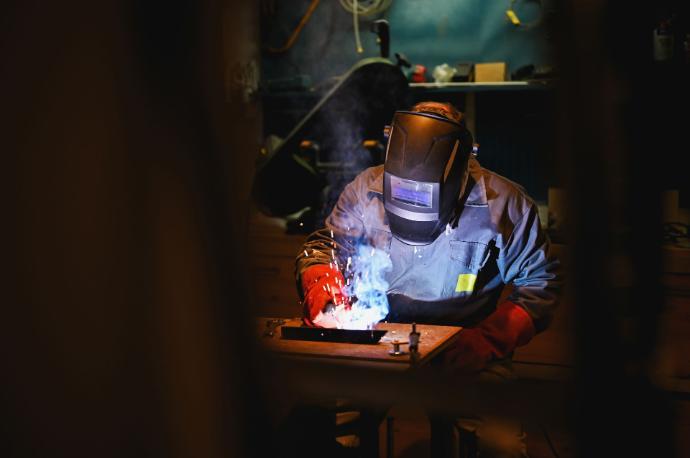
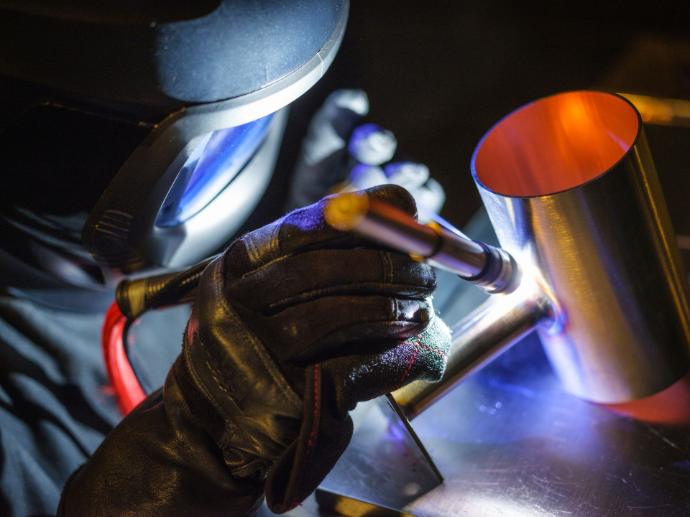
This An Aesthetically Pleasing Weld
Once conquered, TIG welding does give accurate heat control and a better weld finish. The ability to ‘soft start’ and ‘soft stop’ the heat makes the TIG process different from other types of electric welding. It is great for working with thin metals because there is a reduced chance of distortion. The biggest benefit is that you can get your power down really low without blowing through thin metal – such as kitchen sinks and toolboxes.
TIG welding is also free from any spatter that can occur from other arc welding processes. It can be used with or without filler metal. Whatever is needed for each specific job.
The TIG process is used for welding almost all metals and alloy metals in use today. It is a particularly effective and economic way to work with light gauge metals under 3mm thickness and also to work with metals that are difficult to weld with a conventional welding process. These include: aluminium and aluminium alloys, copper, copper alloys, nickel, nickel alloys, magnesium, magnesium alloys, lower alloy steels and carbon steels.
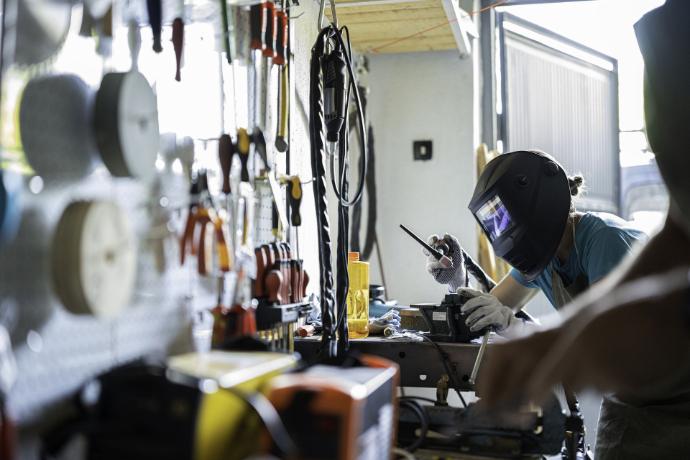
Things to Know
TIG welding must be operated with a constant current power source – DC or AC. This is essential to avoid excessive, high currents being drawn when the electrode is short circuited onto the workpiece. Some TIG welding machines have the option to use AC or DC power. DC current is used for steel and AC current is used for aluminium. Note: some TIG welders only have DC current so they cannot weld aluminium.
Shielding gases are necessary in TIG welding to protect the weld area from atmospheric gases such as nitrogen, hydrogen and oxygen, which can cause defects.
The gas also transfers heat from the tungsten electrode to the metal and it helps start and maintain a stable arc.
The most common way to start a TIG arc is to use HF : High Frequency. HF consists of high volume sparks of several thousand volts which last for a few microseconds. The HF spark will cause the electrode and the workpiece gap to break down or ionise. Once the electron or ion cloud is formed, the current can flow from the power source.
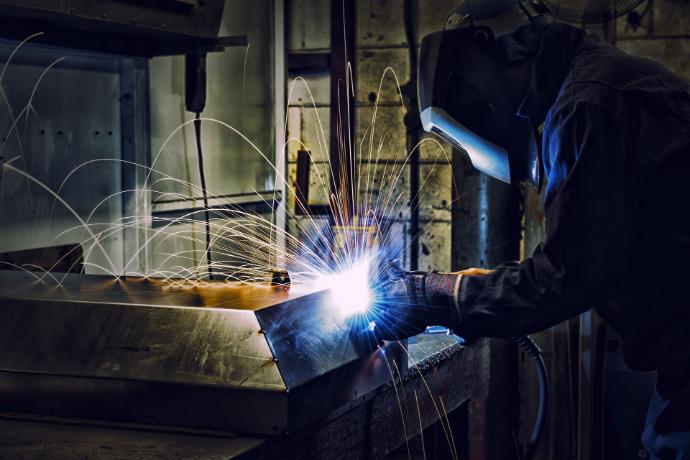
The TIG Torch Assembly
The torch consists of a number of components. Assembly is pretty straightforward. The collet slides into the collet body which then is screwed into the torch head. The tungsten electrode needs to be secured in the torch. It slides through the collet and is secured by an Illumina cup at the front. The back cap at the rear of the torch holds the tungsten at the desired length from the weld.
What is Tungsten Inclusion?
It is a commonly occurring weld imperfection. It is caused by the tungsten electrode dipping into the weld pool or by touching the filler metal rod to the tungsten while welding. Tungsten can break off and get stuck in the pool, or spray splash it, causing and inclusion defect. This risk can be minimised by using the ‘lift arc’ technique, where the short circuit is formed at a very low current level. You must be aware of the right amperage and the size of your electrodes. It is important to select the correct electrode diameter and tip angle for the level of welding current. As a rule – the lower the current the smaller the electrode diameter and the tip angle. Also, the tungsten has to be suitable for the material you are welding and prepared in the correct way.
Handy Tips For Your TIG Welding
Make sure that your work piece is clean of any rust, paint, or any contaminants before you start to weld. This will ensure a stable arc. Make sure that you have the proper helmet suited for TIG welding. Automatic helmets with variable shades of 5-9 and 9-13 are recommended. Using the lower shade setting is ideal for TIG welding. Gas tungsten arc welding is the most complex welding process to learn, but with expert Dynaweld advice, and practice, you will be able to produce quality work.

 and then Add to Home Screen.
